
Why AI Visibility doesn't mean more website traffic (and what to measure instead)

planeed.app
Semantic Brand Architecture
AI Visibility
Relations of AI Visibility
isPartOf
Blogbeitrag | AI Word of Mouth
Relations of Blogbeitrag | AI Word of Mouth
about
- DefinedTerm: https://planeed.org/planeedapp/topics/ai-visibility
Blogbeitrag | Beyond the click
Relations of Blogbeitrag | Beyond the click
about
- DefinedTerm: https://planeed.org/planeedapp/topics/ai-visibility
Blogbeitrag | It's no longer about ranking. It's about being Retrieved
Relations of Blogbeitrag | It's no longer about ranking. It's about being Retrieved
about
- DefinedTerm: https://planeed.org/planeedapp/topics/ai-visibility
Blogbeitrag | The Legal Layer of AI visibility
Relations of Blogbeitrag | The Legal Layer of AI visibility
about
- DefinedTerm: https://planeed.org/planeedapp/topics/ai-visibility
Blogbeitrag | Why some brands show up in AI and others don't
Relations of Blogbeitrag | Why some brands show up in AI and others don't
about
- DefinedTerm: https://planeed.org/planeedapp/topics/ai-visibility
LN | WKO Kärnten - DIGI talk "Von SEO zu GEO" (20.07.26)
Relations of LN | WKO Kärnten - DIGI talk "Von SEO zu GEO" (20.07.26)
about
- DefinedTerm: https://planeed.org/planeedapp/topics/ai-visibility
MBF Artikel | GEO statt SEO
Relations of MBF Artikel | GEO statt SEO
about
- DefinedTerm: https://planeed.org/planeedapp/topics/ai-visibility
WKO | DIGI.talk: Von SEO zu GEO
Relations of WKO | DIGI.talk: Von SEO zu GEO
about
- DefinedTerm: https://planeed.org/planeedapp/topics/ai-visibility
Bernhard Liebl, M.Sc.
Relations of Bernhard Liebl, M.Sc.
knowsAbout
- DefinedTerm: https://planeed.org/planeedapp/topics/ai-visibility
Dr. Aly Sabri
Relations of Dr. Aly Sabri
knowsAbout
- DefinedTerm: https://planeed.org/planeedapp/topics/ai-visibility
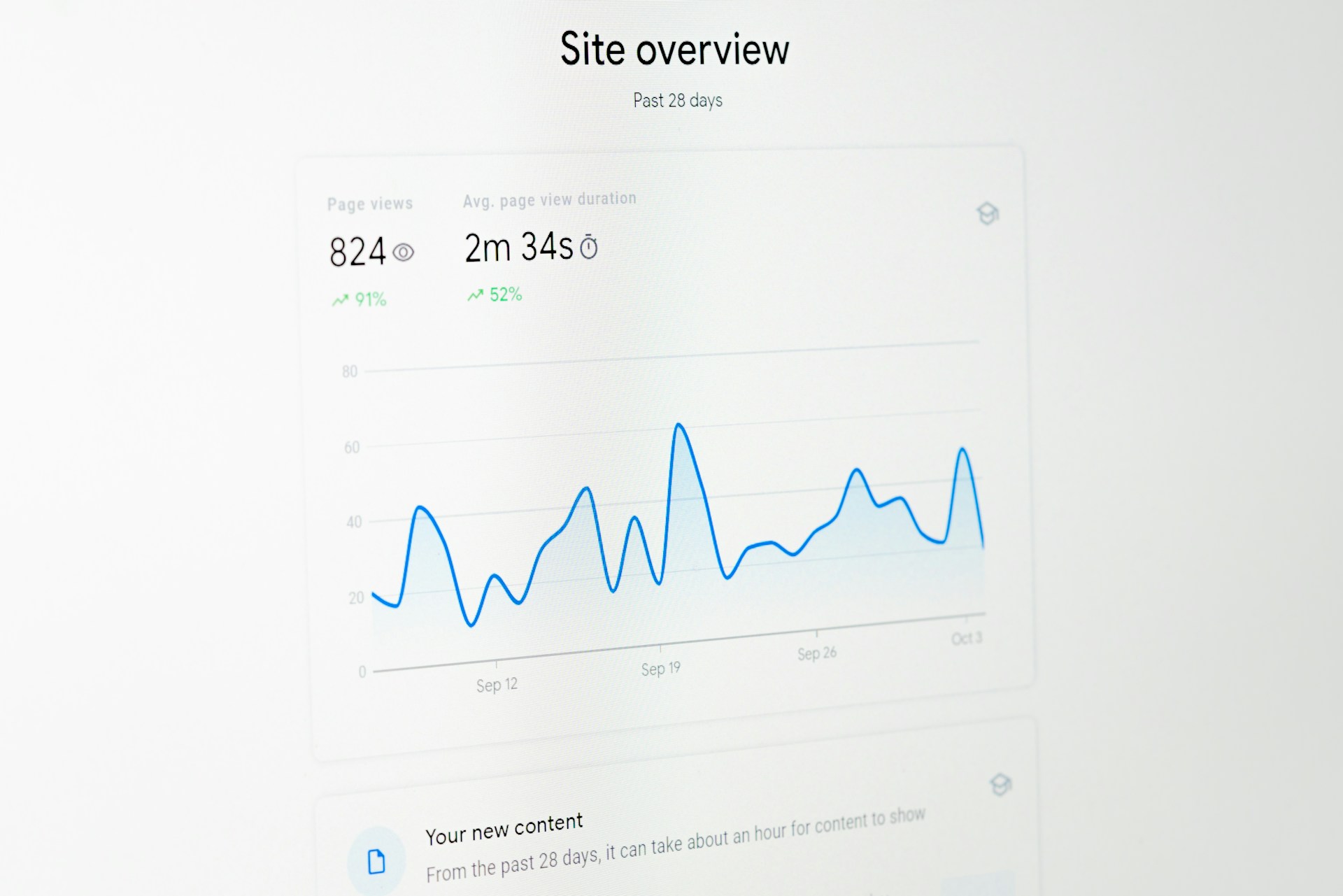
There’s a conversation happening in almost every marketing department right now, and it usually starts the same way: “We’ve optimized our content for AI search — so why isn’t traffic going up?”
It’s the right question, asked with the wrong expectation. And clearing up that expectation might be the single most important thing marketing leaders can do this year.
The SEO Reflex Doesn't Work Here
For two decades, marketing has run on a simple, reliable chain: visibility leads to a click, a click leads to a landing page, a landing page leads to a conversion. SEO was built entirely around that chain. Rank higher, get more clicks, get more customers.
Large language models break the chain at the first link.
When someone asks ChatGPT, Claude or Gemini for a recommendation, the model answers *inside the conversation*. There’s no ranked list of ten blue links competing for attention. In most cases, there’s no link at all. The AI has already read your website, your customer reviews, your press coverage, your comparison articles across the web — and it synthesizes an answer on the spot. This pattern is widely known as zero-click marketing: your brand can absolutely be the answer, without a single user ever landing on your site to get it.
That’s not a bug in the system. It’s the entire point of a generative answer engine.
Being Recommended Is Not the Same as Being Visited
This is the distinction most marketing teams haven’t fully internalized yet: AI optimization gets you recommended. It does not, by itself, get you visited.
Some AI surfaces — Perplexity, Google’s AI Overviews, Copilot with web access — still show source links, so a thinner, later-stage click path survives there. But in pure conversational assistants, the funnel doesn’t shrink. It changes shape entirely. Awareness and consideration now happen largely inside the AI’s answer, before the user ever opens a browser tab.
If your KPIs still start with sessions and click-through rate, you’re measuring a funnel that increasingly doesn’t exist for a growing share of your buyers’ journey.
So What Should You Actually Measure?
If traffic is the wrong first metric, marketing leaders need a new scoreboard — one built around presence, not clicks:
- Share of model voice — how often your brand appears in AI answers to relevant category questions, relative to competitors
- Recommendation rate — how often you’re the one actually suggested, not just mentioned
- Citation accuracy and sentiment — is the AI representing your brand correctly, and favorably?
- Coverage across surfaces — are you showing up consistently across ChatGPT, Perplexity, Gemini, and Copilot, or only in one?

None of these live in Google Analytics. They require monitoring how AI systems talk about you — which is a genuinely new discipline, not an SEO dashboard with a new label.
The Website Isn't Disappearing — Its Job Is Changing
There’s a popular narrative right now that the corporate website is becoming irrelevant as agentic AI takes over discovery. We’d push back on that a little.
The website isn’t dying. It’s being demoted from destination to source. It’s no longer where most people arrive — but it’s still where AI models go to verify who you are, what you offer and whether you’re credible enough to recommend. Structured, well-organized, unambiguous content on your own domain remains the foundation the entire system is built on. Agentic AI still needs somewhere to point when a transaction finally has to happen.
The shift isn’t “the website doesn’t matter.” It’s “the website is no longer your marketing’s main character — it’s one voice in a much larger conversation your brand is already having across the web, whether you’re managing it or not.”
Your Brand's Real Footprint Is the Entire Web
Here’s the mental model shift that matters most: stop thinking of your content as things you publish and start thinking of it as your company’s DNA distributed across the internet.
Your website. Wikipedia. Industry directories. Review platforms. Trade press. Partner mentions. Forum threads. Comparison articles you didn’t write. LLMs don’t read your homepage in isolation — they aggregate signals from all of it to form a single, synthesized picture of who you are.
That means brand consistency is no longer a design-guidelines exercise. It’s a semantic one. Does every source across the web describe your company, your positioning and your capabilities in ways that reinforce rather than contradict each other? Are the relationships between your products, your expertise areas and your market fit clear enough for a model to connect the dots correctly?
Structure Is the New Content Strategy
This is where the real discipline shift is happening — and it’s less about producing more content, and more about structuring what already exists so machines can reliably understand and connect it.
At planeed, we call this Semantic Brand Architecture: mapping your topics, entities, and relationships into a connected knowledge space that both search engines and AI models can parse with confidence — rather than leaving them to guess at your relevance from scattered, disconnected pages.
Content is the fuel. Structure is the engine that makes it run.
What This Means for Marketing Leaders Today
The teams that adapt fastest won’t be the ones producing the most content. They’ll be the ones who:
1. Retire click-based KPIs as the primary success measure for AI-era visibility
2. Start monitoring how their brand is actually represented across AI answers — not just where they rank
3. Treat their entire web presence, not just their website, as a single connected knowledge asset
4. Invest in structure and semantic clarity as deliberately as they’ve historically invested in content volume
The brands that get recommended by AI won’t necessarily be the ones with the most content. They’ll be the ones whose content is the most understandable — to machines and humans alike.
planeed helps B2B brands build the semantic and structural foundation needed to be found, understood, and recommended by AI systems. If you’re ready to see how your brand currently shows up across AI search.
Related Posts